


A city of renters and small rooms
Jazz bands for hire in New York, planned around the room you host in
Few New York hosts are booking a ballroom. They are throwing a birthday in a one-bedroom in Astoria, a retirement dinner in the back room of a Bronx restaurant, an engagement toast on a Brooklyn roof deck, or a family picnic on a Queens lawn that needs a Parks permit. The room comes first, and the room decides how many musicians fit, how loud they can play and when they have to stop.
That is the angle of this page. LIV Entertainment books jazz duos, trios, quartets and larger combos for private and corporate events, and we plan each New York date from the space backwards: the square footage, the building's rules, the neighbours on the other side of the wall and the city rules that apply once the music goes outdoors. LIV has no New York base: bookings for the five boroughs are planned from Culver City, California, at 2651 Fairfax Ave., and the musicians travel in for the date, which is how every booking on this page is put together.
What the census says about New York hosts
Every figure in this table is a 2023 five-year estimate published by the U.S. Census Bureau. Each one changes something practical about a jazz booking.
| Figure | What it changes for the music | Source |
|---|---|---|
| 67.2% of NYC homes are rented (US: 35.0%) | Two out of three hosts have a lease or house rules between them and the band, so the first question is what the building allows. | ACS B25003 |
| 48.8% live in buildings with 20 or more homes (US: 10.1%) | Neighbours sit above, below and beside the party, and the shared roof deck or party room has its own booking and closing time. | ACS B25024 |
| 38.5% of homes are studios or one-bedrooms (US: 13.7%) | The living room, not the guest list, sets the size of the combo. A duo is often the right answer. | ACS B25041 |
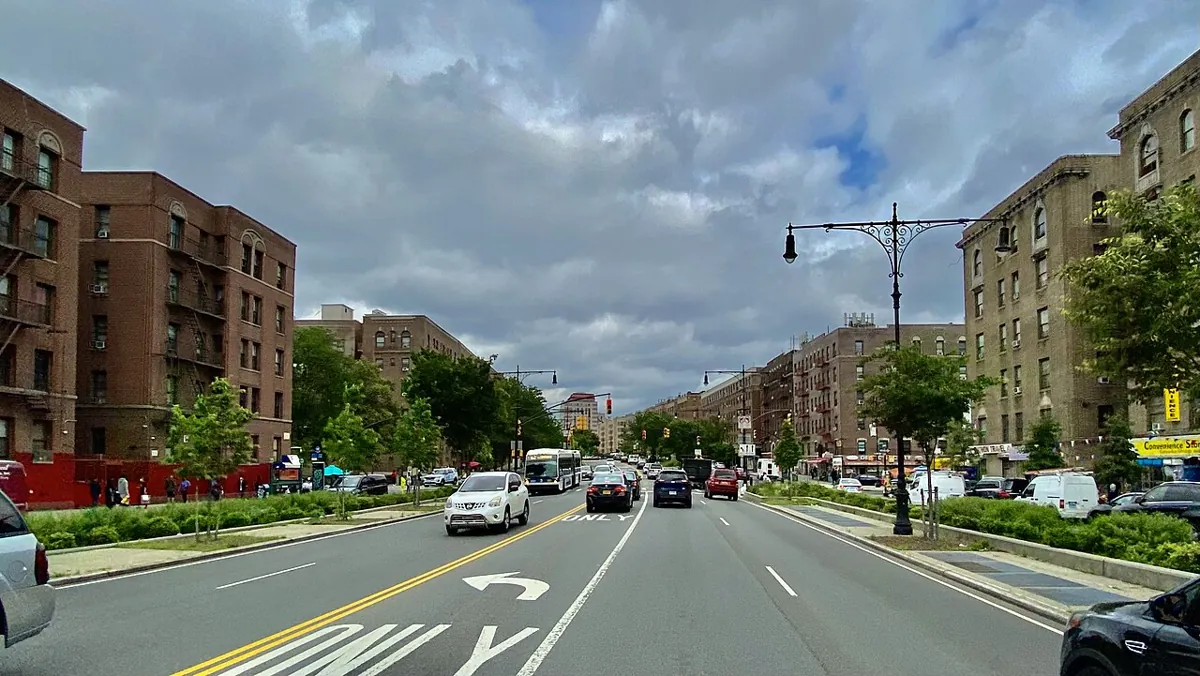
| Bronx: 79.7% rented, 60.6% in 20+ unit buildings | The Bronx is the most apartment-bound borough for hosts. Party rooms and restaurant back rooms carry many of its celebrations. | B25003, B25024 |
| Brooklyn: 31.8% of homes in 2 to 4 unit buildings | The brownstone and the walk-up: one household above, one below, and a parlor floor that holds a trio comfortably. | ACS B25024 |
| Staten Island: 60.0% single-family homes | The one borough where a backyard set is the usual request, with neighbours a fence away rather than a floor away. | ACS B25024 |
| 54.9% of households have no vehicle (US: 8.3%) | Guests arrive by subway and on foot, in waves. The opening set has to work for a half-full room. | ACS B08201 |
The roster, read for New York
LIV jazz acts that suit New York apartments, back rooms and lawns
These are LIV's own acts. What each one plays and how it is built comes from its profile page; which New York room it suits is our reading of that lineup against the spaces described further down.
Blue Velvet for parlor floors
Strings and voice, three or four players
Four players at most, and every instrument unplugged: violin and voice up top, guitar and upright bass under them. Nothing in that lineup needs a drum kit or a wall of speakers, which is why it is the first act we suggest for a parlor floor in Park Slope or a two-bedroom in Jackson Heights.
See Blue Velvet's profileJaneiro for back rooms and decks
Brazilian, unplugged
Janeiro is an acoustic Brazilian group. In a trio it is quiet enough for a restaurant private room where the other tables can still talk, and in a quartet it fills a roof deck without amplification doing the work.
See Janeiro's profileLIV Vintage for party rooms
Pop songs in jazz clothes
LIV Vintage reworks pop songs in a jazz style, and its profile says it can be booked with more vocalists and a larger band than its video shows. That flexibility suits a building party room where the guest count is not settled until the week before: the core group is set, and players are added if the RSVPs climb.
See LIV Vintage's profileMood for big rooms and lawns
A horn section in suits
Mood takes its cue from Frank Sinatra, and its profile photo counts seven players, trombone and sax among them. Seven musicians and a horn section belong in a large party room, a restaurant buyout or a permitted lawn, not a one-bedroom.
See Mood's profileRubato for Latin family parties
Eight players, jazz into salsa
Rubato starts from jazz, blues and R&B and can swing a set over to mambo or salsa; the promo photo has eight players, among them a singer, a keyboard and an upright bass. It is the act for a Bronx or Washington Heights family party where the second half of the night is meant to turn Latin.
See Rubato's profileSax for studio apartments
One player who moves
A single saxophonist who can play a cocktail hour while moving through the guests, and who can later join a DJ. In a studio apartment, one player who walks the room is often more music than the space can hold from a fixed corner.
See the saxophonist's profileKnow the room but not the act? Send us the address, the guest count and a photo of the space, and we will tell you which of these fits.
Ask about a dateSizing the lineup
A jazz duo, trio or quartet for hire in New York, matched to the space
New York households are not bigger than the national norm. The average is 2.5 people in the city and 2.5 in the country (ACS B25010). What differs is the home around them. The chart shows how sharply the boroughs split: Manhattan and the Bronx live mostly in large buildings, Brooklyn and Queens in a mix of small and large, and Staten Island in houses.

A studio or one-bedroom: the duo or the solo sax
More than a third of New York homes (38.5%) are studios or one-bedrooms, nearly three times the US share. In a room like that, twelve guests already fill the floor, so the music has to take up less space than a coffee table. Our answer is a duo, such as voice with guitar, or the solo saxophonist working through the room. A duo needs about the space of an armchair and no amplification at all.
What we leave out matters as much. No drum kit, because a snare in a studio carries through the floor to the apartment below. No keyboard amplifier stacked on a bookshelf. If the host wants a singer, the voice stays unmiked or runs through one small speaker set low, and the guitar does the rhythm work a bassist would do in a bigger room.
A two-bedroom, brownstone floor-through or loft: the trio
The trio is the size most New York rooms above a studio can take. A parlor floor in a Brooklyn brownstone, a two-bedroom prewar in Washington Heights or a converted loft in Long Island City holds three players in a corner and 25 to 40 guests standing. The usual three are a voice or lead instrument, guitar or keys, and upright bass. The bass gives the room its pulse without a drummer.
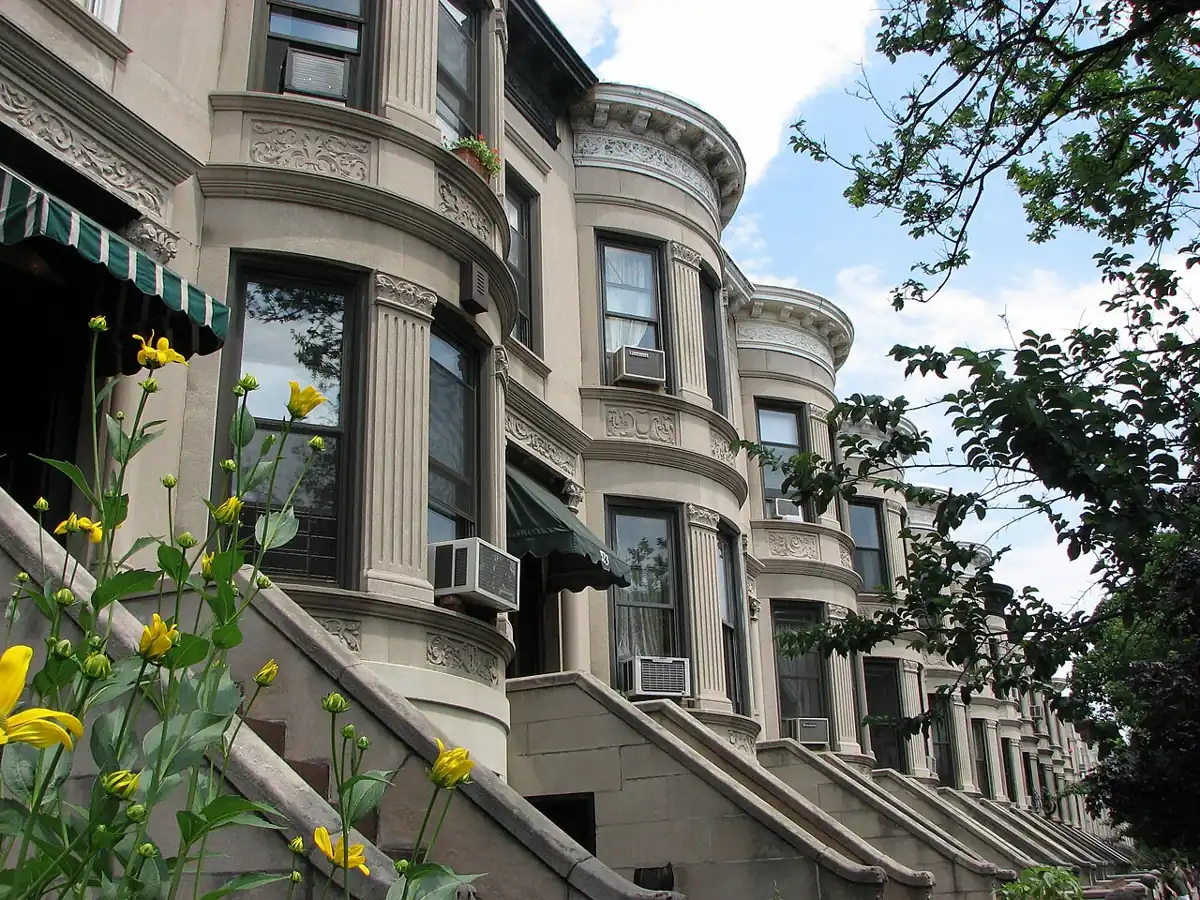
In Brooklyn, almost a third of homes sit in buildings of two to four units. That means one household above and one below, not twenty. A brownstone party is one conversation with two sets of neighbours, which is easier than a tower, but the sound travels through old wood floors more freely than through concrete.


A restaurant private room for a birthday or a client dinner
When the apartment is too small, New Yorkers rent the back room of a restaurant. The music question changes: the restaurant, not the host, is responsible for keeping its sound inside, and the city's commercial music limits (covered in the rules section below) fall on the business. In practice the room manager sets a volume ceiling, and a trio or quartet plays under it.
A seated dinner for 30 in a private room suits a trio that plays standards or bossa nova at conversation level. A client dinner works the same way: the combo is there so people can talk over it, not to it. If the room is a full buyout with a dance floor, the brief has become a party band, which is a different booking (see the nearby pages at the end).
A roof deck or the building's party room
Large buildings often have a shared roof deck or a ground-floor party room that residents reserve. These spaces fit a quartet: room for a horn, a bass and a rhythm player, and enough air that the sound does not pile up. Two rules come with them, and neither is the city's. The building sets a closing time, and the reservation sets a guest cap. We size the combo to that cap and end the last set before the closing time, not on it.
On a roof, the sound goes up and out rather than through a floor, so an acoustic quartet carries well. The neighbours who hear it are in the next building, across an air shaft or a street, which is why we keep anything amplified low and pointed back toward the building.
A park lawn with more than 20 guests
A park lawn is the one New York setting where the combo has to compete with open air, traffic and other picnics. Acoustic strings get lost outdoors past the first few rows, so we bring a lead horn (sax or trumpet) and a fuller rhythm section, often a quartet plus a horn. The bigger issue is paperwork: more than 20 guests on Parks property needs a permit, and amplification adds another. The permit rules come later on this page, park by park.

Hosting in a one-bedroom or a parlor floor? Tell us the room's size and which floor you are on, and we will put forward a duo or trio that fits it.
Size my comboChoosing the front of the combo
Who leads the combo: singer, pianist, saxophonist, violinist or guitarist
Once the room has fixed the size, the next decision is which instrument carries the melody. In a small New York space that choice changes the volume, the floor area and the mood more than the style does.
Jazz singers for hire in New York: a voice in a small room
A singer turns a combo from background into something guests stop and listen to. That is worth it for a toast, an anniversary or a birthday where the host wants a song dedicated to someone. It is less useful at a networking dinner, where a voice competes with the conversation it is meant to support. In a one-bedroom, a singer can work without a microphone; in a party room of 60 people, a small vocal speaker is usually needed. For voice-led acts on the roster, start with the live singers page.
Jazz pianists and keyboard players: the piano question in an apartment
Few New York apartments have a piano, and fewer have one that is tuned. So for a home date the pianist usually arrives with a portable instrument, and that makes piano the one lead instrument that always brings some amplification into the room. In a restaurant private room that already has an upright or a grand, the pianist can play it acoustically, and the trio becomes piano, bass and voice.
Saxophonists for hire in New York: one horn that carries
The saxophone is the loudest instrument a small combo is likely to bring, and that cuts both ways. Outdoors on a lawn or a roof, one sax carries a melody to the far end of the crowd with no help. Indoors in a studio, a full-voiced sax next to a shared wall is the instrument a neighbour notices first. For apartments, the saxophonist plays softer and moves through the room instead of standing in one spot. For lawns, the sax leads.
Jazz violinists and the string-led trio
A violin-led combo sounds lighter than a horn-led one and carries less through walls, which makes it a strong choice for brownstones and older buildings. Blue Velvet is put together that way, its violin riding over the guitar and the bass. A violin also blends with bossa nova and standards, so a string-led trio can cover a dinner and a toast without changing players.
Jazz guitarists and the singer-guitarist pairing
The guitar is the most flexible instrument in a small combo. It plays chords where a piano would and walks a bass line where a bassist would, which is why a singer-guitarist duo is the smallest lineup that still sounds complete. In New York, where the duo is often the right size, the guitarist is the player who makes it work. Our acoustic bands page lists more unplugged formats.
From duo to jazz ensemble: how many musicians a New York party needs
Jazz groups on LIV's roster range from a single saxophonist to Rubato's eight players, and a band can be booked bigger than that. The useful question in New York is not how many musicians a jazz band has but how many your room can hold while guests still move around. A rough rule we use: a duo for a room that fits about 15 guests, a trio up to about 40, a quartet for a party room or a deck, and five or more only where there is a stage, a dance floor or open lawn. A full jazz ensemble for hire in New York earns its place on a lawn or in a buyout, not in an apartment: going bigger than the room does not make the party better. It makes the music louder than the conversation and puts the bassist in the hallway.
What the combo plays
The five-borough style menu: swing, Dixieland, standards, Latin, bossa and jazz-pop
A small combo can change style between sets. The list below is the menu New York hosts pick from, with what each style asks of the lineup and the room.
Swing bands for hire in New York
Swing is jazz built for dancing, and it needs a horn and a steady rhythm section to sound right. That makes it the style where room size bites hardest: a swing quartet in a one-bedroom is loud, and swing without anyone dancing loses half its point. It works in a building party room with the furniture pushed back, on a roof deck in summer, or in a restaurant where the host has booked the whole space. Mood, with its swing-era horn arrangements, is the act we put forward when a host asks for swing.
Dixieland bands for hire in New York, and Louis Armstrong's Queens street
Dixieland, also called traditional or New Orleans jazz, puts trumpet, clarinet and trombone in front, often with banjo or tuba underneath. Brass carries in open air, so this is music for outdoors more than for a living room. It also has a home in the boroughs. Louis Armstrong and his wife Lucille moved to a house on 107th Street in Corona, Queens, in 1943 and stayed for the rest of his life; the house, now the Louis Armstrong House Museum, is where he practiced and entertained friends and fellow musicians between tours. The most famous trumpeter of traditional jazz hosted at home in an ordinary Queens neighbourhood, which is a fair picture of how much of New York's music still happens.
Standards for a dinner table in a small room
Standards are the tunes every jazz player learns first, and they share one practical virtue for New York hosts: they were written to be played by small groups at low volume. A trio can take a standard down to a whisper, stretch it while a course is served, or end it in eight bars when someone stands to speak. That is why, for a dinner where the combo plays through the meal in an apartment or a back room, standards are what we program by default and the other styles come in as sets around them.
Salsa, Latin and Caribbean colours carried by a jazz combo
More than a quarter of New Yorkers (28.4%) are Hispanic or Latino, and in the Bronx it is more than half (54.9%), with Dominican (23.4%) and Puerto Rican (16.9%) the largest groups there (ACS B03001). At home, Spanish is the language of 22.7% of New Yorkers aged five and up (ACS C16001). For many family parties in the city, a set that turns to salsa, mambo or Latin jazz is expected, not an extra. Whether a jazz group can deliver that set depends on who is in it, and Rubato is the act on the roster that is built to. Caribbean and world music requests work the same way. More than a third of New Yorkers were born abroad (36.5%), and nearly half of Queens residents (47.6%) were (ACS B05002), so a host may ask for a song from home. We ask for that list early, so the players can arrange it for the instruments they have.
Bossa nova for a Sunday afternoon
Bossa nova is quiet by design: nylon-string guitar, soft voice, brushed rhythm. It suits New York's smallest rooms more than any other style here, and it works for daytime events, from a brunch in a garden apartment to an afternoon engagement party on a deck. Janeiro sings in more than one language, which helps when not every guest shares English.
Jazz-pop: songs guests already know, in a jazz arrangement
Jazz-pop takes current and recent pop songs and arranges them as swing, ballads or bossa. It is the style younger hosts ask for when they want jazz but worry it will feel like a hotel lobby. LIV Vintage is built for this. In a party room with a mostly under-40 crowd, a jazz-pop set lets guests recognise a song a few bars in, which gets more reaction than a standard they do not know.
Noise Code, NYPD and Parks
The city rules a jazz set runs into, from a living room to a park
New York has three layers of rules that touch live music at a private event: the Noise Code (enforced by the Department of Environmental Protection and the NYPD), the NYPD's sound device permit for amplified sound, and the permits of whoever runs the park or street. The location and whether anything is plugged in decide which of them apply.
The Noise Code inside an apartment building
At home, the rule that matters is the general ban on unreasonable noise in Administrative Code section 24-218. The Noise Code defines unreasonable noise as excessive or unusually loud sound that disturbs the peace (DEP Noise Code fact sheet). There is no fixed decibel number for a party in a home; the test is whether it disturbs. The city's own guide to the Noise Code puts it plainly: one person's ceiling is another person's floor, and musical instruments should be kept at a reasonable volume, especially at night. The same guide says the NYPD handles neighbour-to-neighbour complaints, which come in through 311. The city's penalty schedule treats the hours from 10 p.m. to 7 a.m. more strictly than the daytime, so 10 p.m. is the line we plan around.
When a restaurant or bar hosts the set
Music in a commercial space falls under a separate, measured rule. Under section 24-231, a restaurant, bar or other business playing live or recorded music may not exceed 42 decibels measured inside a nearby home, nor 7 decibels over the ambient level on the street 15 feet or more away between 10 p.m. and 7 a.m.; bass is limited to 6 dB(C) over ambient when ambient is above 62 dB(C) (DEP guide). The business carries that responsibility, and the penalties for breaking it are steep, which is why a restaurant manager may ask the combo to drop the bass amp or close the windows. We expect it and plan an acoustic setup for any private room above or beside apartments.
NYPD sound device permit for amplified sound outdoors
Once music is amplified at an outdoor event, the city's event office says a sound permit is needed from the local precinct where the event takes place, and it lists background music and musical performances among the uses it covers (NYC Citywide Event Coordination). The NYPD's permit page sets the steps:
- Download and fill out the Sound Device Application.
- File it at the precinct where the device will be used, no less than five days before the event.
- Pay the $45 fee by certified check or money order.
- If approved, pick the permit up on the day of the event or as the precinct staff direct.
The permit is governed by Administrative Code section 10-108, printed on the application form. The commissioner will not issue one for a spot within 500 feet of a school, courthouse or church while school, court or worship is in session, or within 500 feet of a hospital or similar institution. The form asks whether the location is within that distance, how many people will attend and how far the sound is meant to carry, so have those answers before you go to the precinct.
Hours the permit can cover
Section 10-108 also limits the clock. No permit covers amplified sound between 10 p.m. and 9 a.m. anywhere. Within 50 feet of a building lawfully occupied as a home, the window is tighter: it closes at 8 p.m. or sunset, whichever is later, and opens at 9 a.m. on weekdays and 10 a.m. on weekends and public holidays. In a city where almost every lawn and plaza has an apartment building within 50 feet, the shorter window is the one most hosts face.

NYC Parks lawns and the 20-guest line
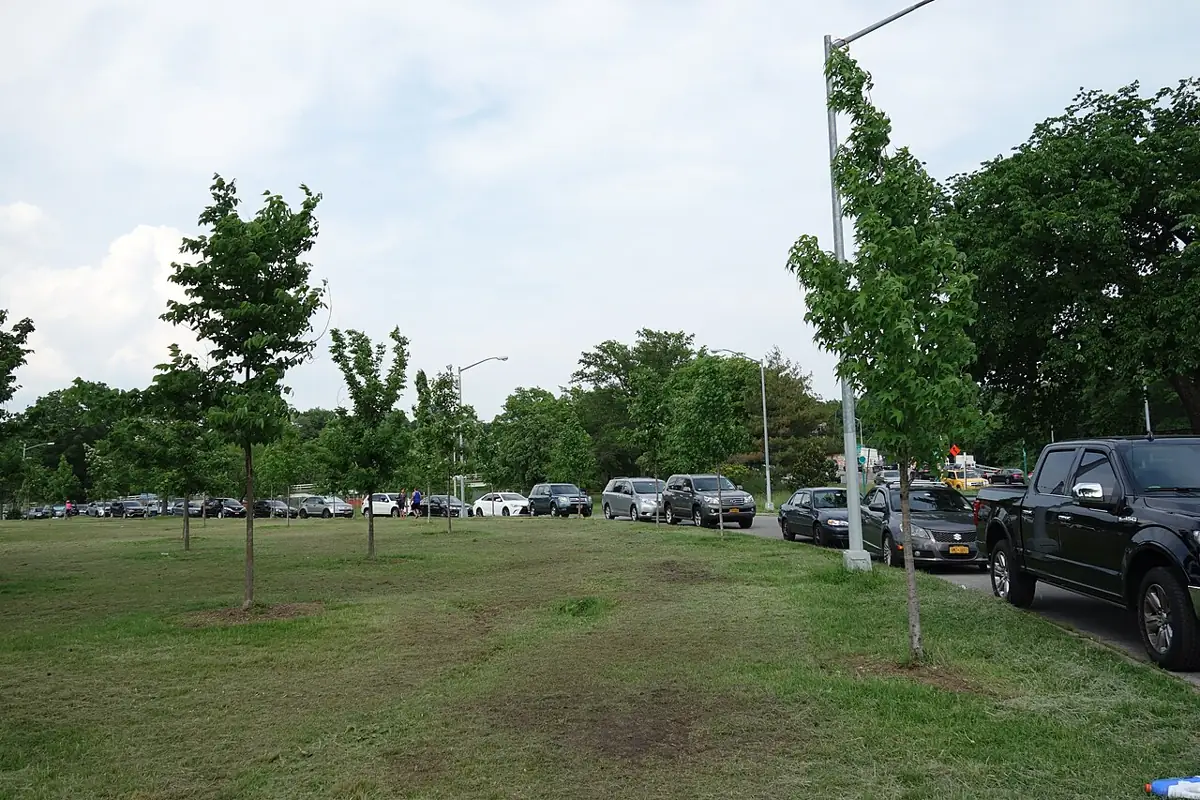
NYC Parks requires a special event permit for any event with more than 20 attendees, and recommends one at any size if you want to use amplified sound, set up a tent or make sure no other group takes the spot (NYC Parks special event permits). Apply at least 21 days before the event; Parks will not accept an application with fewer than 21 days to go. Processing costs $25, which is not refundable, and sound, tents and signage can add fees. Applications for the next calendar year open on the first Tuesday after Labor Day.
Brooklyn Bridge Park and Hudson River Park set their own terms
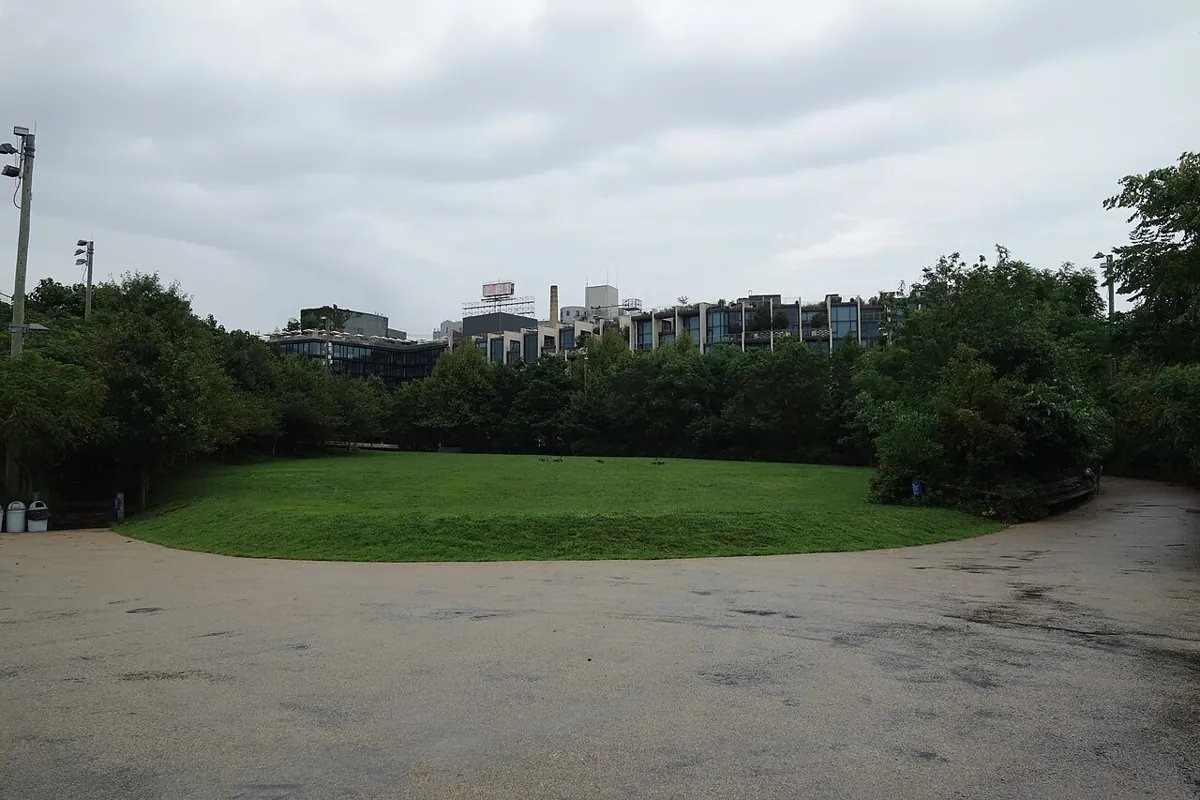
Two of the city's most-requested waterfront lawns are not run by NYC Parks. Brooklyn Bridge Park requires a permit for any gathering larger than 20 people, charges a $25 application fee plus $1 card processing, asks for at least 21 business days, and does not permit amplified sound, microphones included. Hudson River Park issues small gathering permits for groups of 20 to 100, which allow one small battery-powered speaker, with a $25 application fee and the same 21 business days. For both, an acoustic combo is the plan.


A block party on your own street
Some New Yorkers skip the park and close their block. Block parties are permitted by the Street Activity Permit Office, part of the Mayor's Office of Citywide Event Coordination and Management: one block for one day, no sale of goods, applied for 60 days in advance, with a $25 processing fee paid online (CECM permit types, fees). If the combo on the block will be amplified, the precinct's sound permit is a separate filing.
Planning a picnic on a park lawn? The Parks permit has to be filed 21 days ahead. Send us the date and the park, and we will hold an acoustic or amplified lineup to match.
Plan an outdoor setThe building, the neighbours, the room, the clock
Before you book: a host's checklist for a New York building
Each item below is something a host can settle before the date. Next to it: what tends to happen when it is skipped, and what the combo does about it.
The building
- Read the lease or the house rules for anything on parties, live music or quiet hours.Skipped: a managing agent's letter after the fact, or a super at the door at 9 p.m.What the combo does: we plan the last set to end before the quiet hour you give us.
- Reserve the party room or roof deck in writing, and note its guest cap and closing time.Skipped: another resident's booking on the same evening, or a cap lower than the guest list.What the combo does: we size the lineup to the written cap, not the hoped-for one.
- Ask whether amplified music is allowed in the shared space at all.Skipped: a keyboard and speaker that arrive and cannot be used.What the combo does: when the answer is no, we send an all-acoustic lineup, such as guitar, upright bass and voice.
The neighbours
- Tell the households above, below and beside you the date, start time and finish time.Skipped: a 311 call mid-set, routed to the NYPD as a neighbour complaint.What the combo does: we start at conversation level and keep a quieter arrangement of each set ready.
- In a brownstone or walk-up, find out who lives directly under the room the combo will use.Skipped: the upright bass sits on old floorboards right over a bedroom.What the combo does: we set the bassist on a rug and away from the shared wall, or swap to a lighter string-led trio.
- For an outdoor set, check whether any home is within 50 feet of where the combo will stand.Skipped: an amplified permit window that closes at sunset instead of 10 p.m.What the combo does: we plan the amplified part for the earlier window and play acoustic after it.
The room
- Measure the corner where the musicians will stand and send us a photo.Skipped: a quartet booked for a corner that fits two, with the bass in the hallway.What the combo does: we pick the instruments to the measurements, not the other way round.
- Keep the rugs and curtains in place, and keep the combo out of the room's corners.Skipped: hard floors and bare walls bounce the sound, and a corner boosts the bass; the DEP's residential noise guidance names carpet, heavy curtains and corner placement for exactly this reason.What the combo does: we set up along a wall, off the corners, on a rug where there is one.
- Find a free power outlet near the playing spot if a keyboard is in the lineup.Skipped: an extension cord across a doorway in a crowded room.What the combo does: if there is no safe outlet, we switch the keyboard for guitar.
The clock
- File the permits in order: block party 60 days, Parks 21 days, the NYPD sound permit 5 days.Skipped: a Parks application refused for arriving inside 21 days.What the combo does: we hold the date and, without a permit, recommend a smaller acoustic set at a home or private venue instead.
- Set the finish for 10 p.m. or earlier in a residential building.Skipped: the loudest part of the night lands in the hours the Noise Code treats most strictly.What the combo does: we put the swing or Latin set early and close with ballads.
- Expect guests to arrive over an hour, by subway and on foot.Skipped: the strongest set plays to a third of the guests.What the combo does: we open with a quiet first set and save the requests for when the room is full.
Not sure what your building allows? Tell us what the house rules say, and we will put forward a lineup that works within them.
Check my buildingHiring jazz musicians in New York
Hiring jazz musicians for a New York apartment, roof or lawn: the follow-up questions
Does LIV keep a local jazz trio in Queens, Brooklyn or the Bronx?
No: the combo travels to your date rather than living around the corner, so the honest answer to "near me" is that we plan the booking around your neighbourhood rather than from it. What does change by borough is the setting: in the Bronx we usually plan for a party room or a restaurant, in Brooklyn for a parlor floor or a roof, in Queens for a mix of apartments and houses, and on Staten Island for a backyard. Tell us the borough and the street, and we start from there.
What does a 3 piece jazz band usually include?
A three-piece jazz band almost always has a bass, either upright bass or bass guitar, to hold the time. The other two are a harmony instrument (piano, keyboard or guitar) and a lead voice (a singer, sax, trumpet or violin). For a New York apartment, the lineup we suggest most is voice, guitar and upright bass, because none of the three needs a drum kit and only the voice may need a small speaker. A piano trio (piano, bass, drums) is the classic club format, but its drums make it a better fit for a restaurant or a party room than a home.
Is an acoustic trio quiet enough for an apartment with neighbours on every side?
Usually, yes, if the players know where they are. An acoustic trio at conversation level is closer to a loud dinner party than to a stereo turned up. The things that push it over are a drummer, an amplifier, a horn played at full volume and a late finish. In a building of 20 or more homes, which is where nearly half of New Yorkers live, we keep the trio unplugged, set it away from shared walls and finish by 10 p.m. If the neighbours have been told the date, an acoustic trio almost never becomes a problem.
What happens if a neighbour calls 311 during the set?
A neighbour-to-neighbour noise complaint goes to the NYPD, which can respond and ask for the volume to come down. If a summons is written for unreasonable noise under section 24-218, the city's penalty schedule sets a first-offense penalty of $350 between 7 a.m. and 10 p.m. and $450 between 10 p.m. and 7 a.m., rising to $700 and $900 for a second offense. The respondent is the person making or permitting the noise, which in a home is the host. When an officer or a neighbour asks us to come down, we do it right away.
Do I need a permit for a jazz trio in a Staten Island backyard?
For an acoustic trio in a private yard, the city's event permits do not come into it, because the combo is not on a street, a park or a plaza and is not using a sound device; the Noise Code's unreasonable-noise rule still applies. Once anything is amplified, the city's event office says a sound permit from the local precinct is needed for amplified sound at an event, with the $45 fee and five-day filing. Staten Island is the borough where 60.0% of homes are single-family, so a yard set is a common request there. We usually keep it acoustic and plan to finish while it is still light.
Should I book a jazz duo or an acoustic duo for a New York apartment?
Both fit the same small room; the difference is the material. A jazz duo plays standards, ballads and bossa nova and improvises around them, so the music shifts set to set and sits well under conversation. An acoustic duo leans on pop and rock songs everyone knows, played on guitar and voice, which suits a crowd that wants to sing along. LIV's Chechi X Conrad is an acoustic duo on the roster. For a dinner, we suggest the jazz duo; for a birthday where the host expects guests to join in on the chorus, the acoustic duo. Either way, two players and no drum kit keep a one-bedroom party on the right side of the neighbours.
Can a jazz combo play blues for a New York party?
Yes, and the two acts with blues in their make-up are the place to start. LIV's band listing describes LIV Vintage as blues and jazz, and Rubato's profile says it is rooted in jazz, blues and R&B. A slow blues is also one of the easiest things for a small combo to play quietly, since it rests on a repeated twelve-bar shape that a trio can stretch or shorten to fit a toast. What changes the room is the electric version: a blues guitarist with an amplifier and a drummer is a bar band, and in a building with shared walls we keep the blues acoustic, with upright bass and a hollow-body or acoustic guitar.
Can I hire a jazz pianist if my apartment has no piano?
Yes. A portable keyboard and one small speaker stand in for the piano, so plan on a single outlet near the corner where the combo plays. If your building does not allow anything plugged in, we replace piano with guitar, which covers the same harmony job acoustically. If you have a piano you want used, tell us when it was last tuned; a piano that has drifted out of tune is harder to play with a bass and a horn than no piano at all.
What sets the price of a jazz combo in a New York apartment or party room?
Prices for a jazz band rental in New York are quoted per booking, not published, and the room you host in sets most of the number. A studio or a walk-up usually means fewer players and no amplification, so the quote covers musicians and little else. A party room or roof deck with its own closing time can split the evening into a shorter amplified part and an acoustic part, which changes the hours we book. A keyboard adds gear only where there is a safe outlet and a building that allows it. Permit fees for a park or a street are paid by the host to the city, separately from our quote.
So when you ask how much it costs to hire a jazz band, send the address, the room's size and its house rules first: they answer half the question.
Can a jazz trio play a corporate event in a New York office or a client dinner?
Yes, and the same sizing logic applies. A trio playing standards or bossa nova at an office reception or a client dinner in a restaurant private room is there to support conversation, so it plays under the talk and without drums. Offices in large buildings usually have their own rules on amplified music and after-hours use; ask the building management before the date. When the office wants people dancing by nine, hand that brief to the New York party bands instead.
Can the combo play salsa, Latin and Caribbean music, or only jazz?
That comes down to the players booked. A jazz group with Latin players can move into salsa, mambo, bolero or Latin jazz as a full set, and Rubato is built for that. A small acoustic trio can play a few Latin or Caribbean songs in its own arrangement but will not sound like a full salsa orchestra. If the party is mainly a salsa night with a dance floor, say so when you book, and we will plan the lineup around it rather than adding songs to a jazz set.
Is this the right page to hire a jazz band for a New York wedding?
Yes. Weddings have their own rhythm of ceremony, cocktail hour, dinner and dancing, and LIV's Manhattan jazz page is built around that day. This page is about sizing a combo to a New York room, which matters for a wedding too: a restaurant wedding dinner for 40 in a private room takes the same trio we would send to a birthday there, while a reception with a dance floor may need a larger band.
Can a jazz singer perform without a microphone?
In a studio or one-bedroom with 10 to 20 guests, yes, and it often sounds better. A trained jazz voice carries across a living room over a guitar and a bass played softly. Past roughly 40 guests, or on a roof or a lawn, the voice needs help, and a small battery or plug-in speaker is enough. At Brooklyn Bridge Park, where microphones are not allowed, the singer works unamplified and we keep the group close to the guests.
Who plays the Frank Sinatra songbook for a New York party?
Mood is the act on LIV's roster built around Sinatra; its repertoire is covered on its own page. The New York question is space: at seven players it needs a party room, a restaurant buyout or a lawn rather than a living room. For a smaller space, a singer with a piano or guitar trio can carry the same songbook at a fraction of the volume.
Can a saxophonist play alongside our DJ?
Yes. LIV's saxophonist profile describes exactly that: a solo sax through the cocktail hour, then joining a DJ later in the night. For a New York party room, it is an efficient setup, because one player and one DJ take less floor than a band. The DJ half of that pairing is booked through our New York DJ page.
Next door on this site
More LIV Music For Hire Near You in and around the five boroughs
- Live jazz in ManhattanJazz planned around a Manhattan wedding day.
- Jazz bands on Staten IslandThe borough of houses and backyards.
- Live bands in New York CityCover and dance bands for receptions and company parties.
- DJs in New York CityFor a party room where a DJ follows the jazz set.
- LIV's jazz bandsThe full jazz roster, wherever the event is.
- Acoustic bandsUnplugged lineups for rooms that cannot take a PA.