

Live Bands For Hire in Phoenix
Wedding receptions, company events, private parties and festival stages in Phoenix, with acoustic acts for patios and courtyards and full bands for ballrooms.
Send us the Phoenix venue, the date and whether the music is indoors or out, and we reply with the acts free that night.
Check a Phoenix datePhoenix, AZ
Unplugged on the patio or wired for the ballroom: twelve LIV acts for a Phoenix event
The roster is split the way Phoenix venues split their rules: acts that can play a courtyard at conversation level, and bands that need a sound system and belong indoors or on a permitted stage. A wedding can book one of each.
Little or no amplification
For patios, courtyards, lawns, ceremonies and dinners where guests are talking.
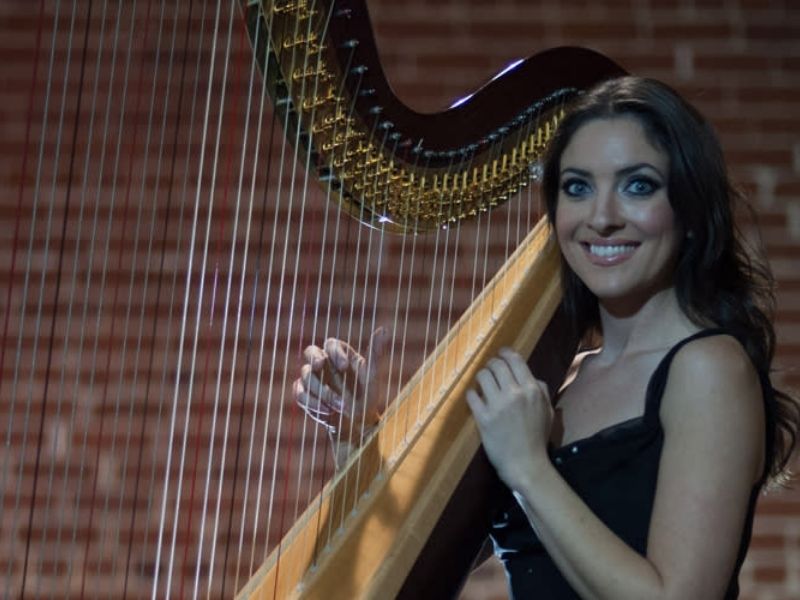
Charissa, a harpist for ceremonies without speakers
Solo harpist, based in the San Diego areaAn orchestral harpist who has played under John Williams and Michael Giacchino, with collaborations alongside Dionne Warwick and Barry Manilow. The quietest act on the list, for a ceremony in a courtyard where the vows have to carry without a speaker in sight.

A string quartet that needs no power
Two violins, viola and celloPachelbel's Canon at one end of the songbook, Rihanna's "Diamonds" at the other. Four acoustic instruments can play the processional in a garden, then move with the guests to the cocktail hour.
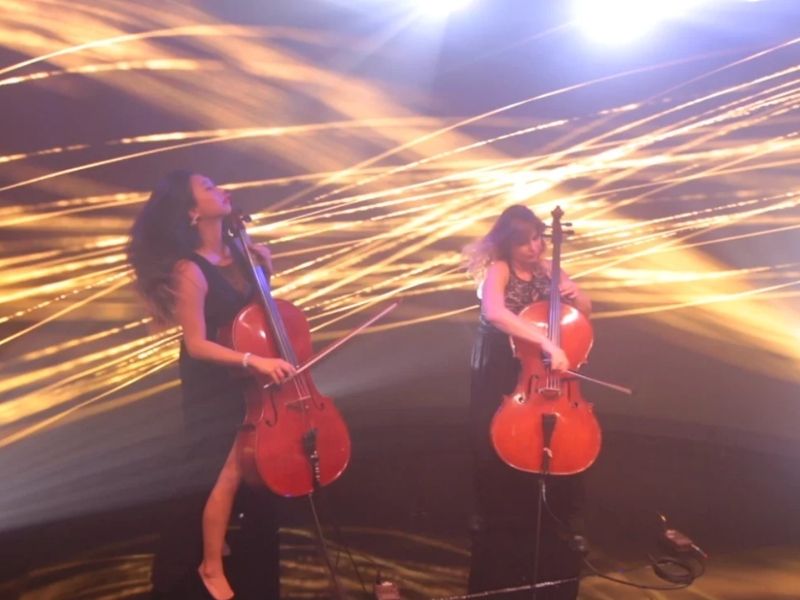
Deux Cellos, two cellos in a shaded corner
Cello duoClassical arrangements and current pop songs played on two cellos. Two chairs and a small footprint make them easy to fit on a shaded corner of a terrace.
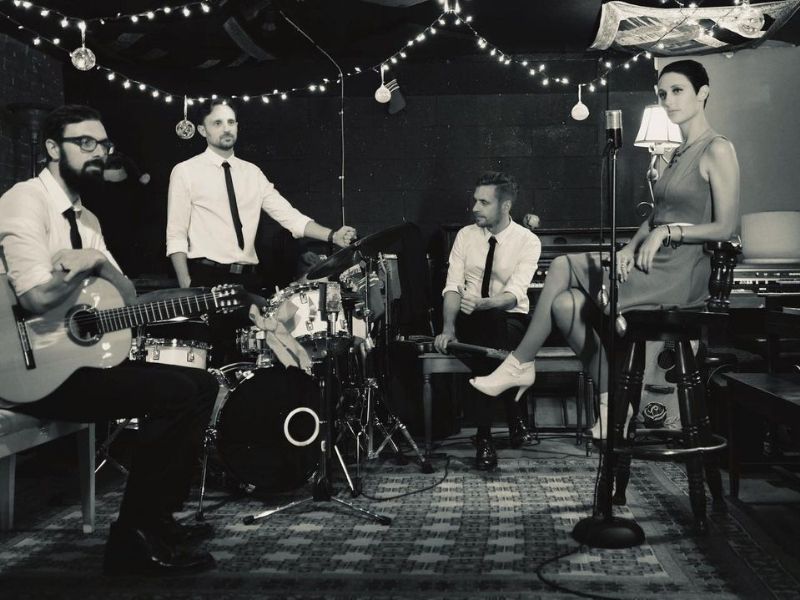
Janeiro, bossa nova for terraces
Bossa nova and samba, trio or quartetLIV lists Janeiro for poolside and terrace receptions, garden parties and ceremonies. Brazilian standards with swing, salsa and smooth jazz on call, featured in Martha Stewart Weddings in 2013.

Chechi, a voice and a guitar
Singer and guitaristA duo covering top 40, hip-hop and older hits. Two performers take up a corner rather than a stage, which suits a birthday dinner on a back patio or a welcome drink in a hotel courtyard.
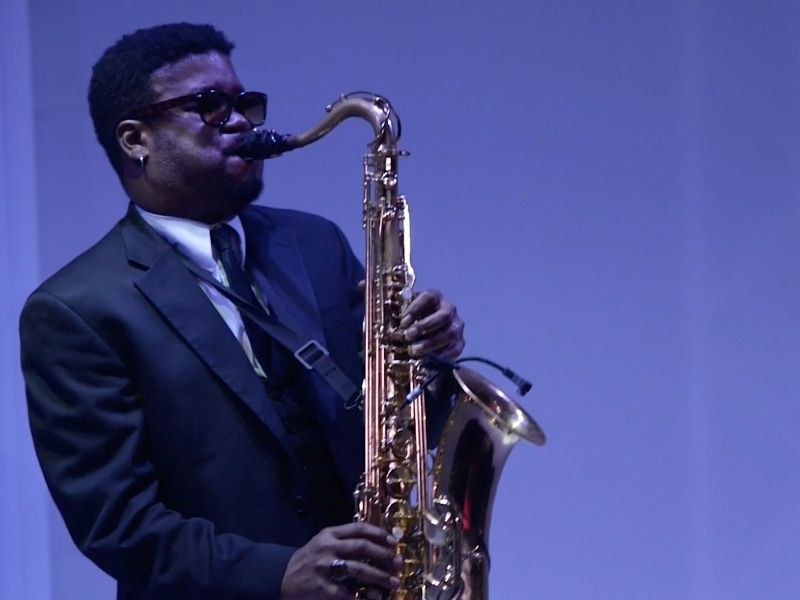
A saxophonist who walks the room
Solo, over a DJ, or with a bandWalks through a cocktail hour on its own, then plays live over a DJ set once the dancing starts. The same booking can cover the processional at a low volume.
Sound system, power and a stage
For ballrooms, salons, theaters and permitted outdoor stages.
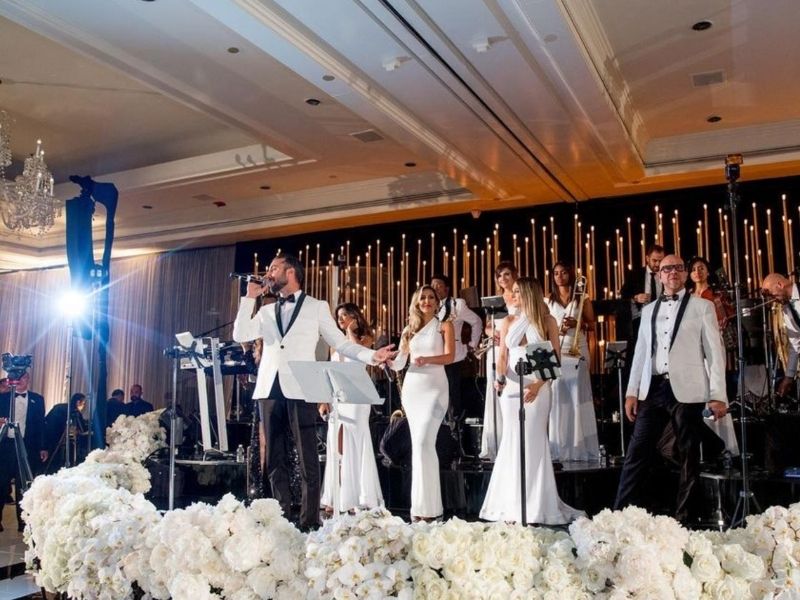
Rouge, a show band that scales
3 to 40 performersA Southern California party band playing top 40 and classic hits, with American, Latin, Russian, Indian, Israeli, Persian and Armenian sets. The full 18-piece show adds solos, choreography and costume changes; smaller versions run down to three vocalists over a DJ track.

Legendary, seven players for a rock-and-pop floor
Seven-piece rock and popSixty years of rock, pop and funk, The Beatles to Rihanna, sung in English and Hebrew. The band's videos also show a twelve-piece version for a bigger room.

26 Orchestra, Persian to Greek on one stage
International top 40Founded by Navid Zad, the ensemble covers hits in Persian, Hebrew, English, Spanish, Arabic, French, Russian, Turkish and Greek, so one band can carry a reception where the families dance to different radio stations.
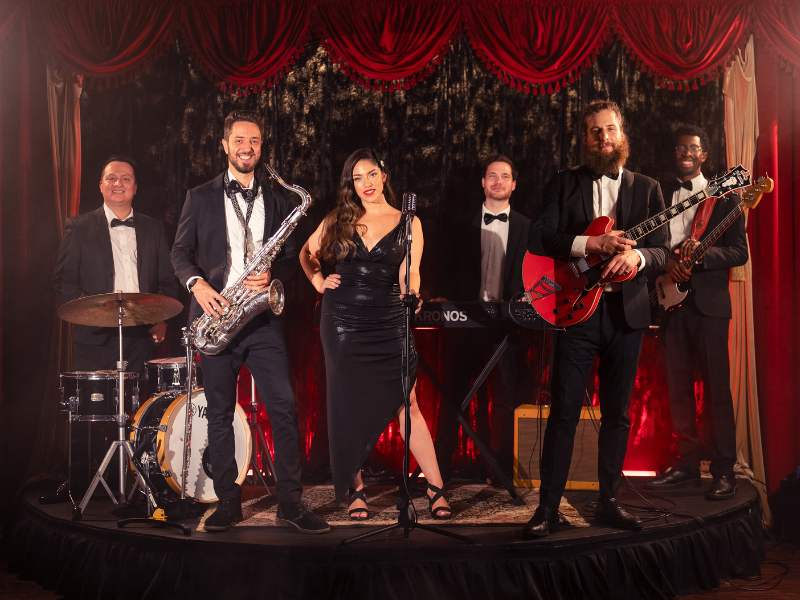
LIV Vintage, pop with a jazz finish
Pop songs with a jazz treatmentStarts as background over dinner and can grow with extra vocalists and players for a dance set. A natural fit for a Gatsby or speakeasy theme at a company party.
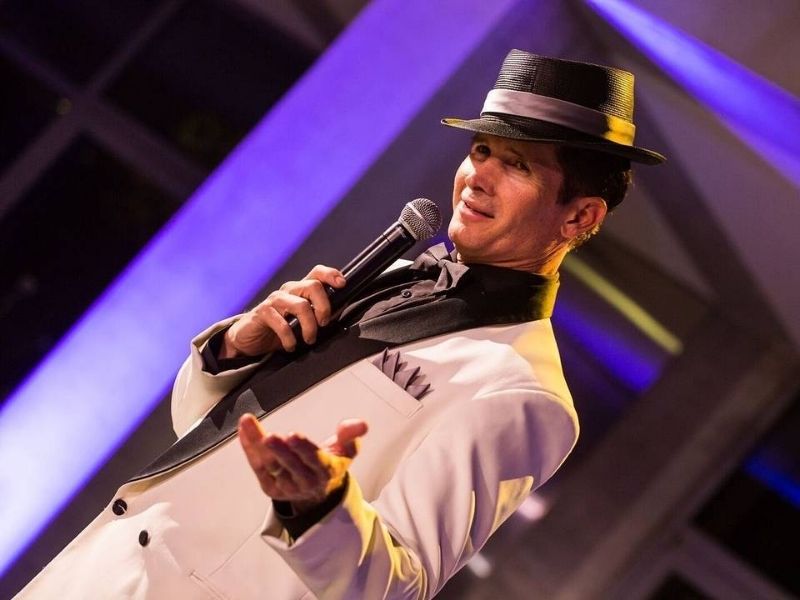
Mood, crooner songs with horns
Crooner songs with horn chartsSinatra and Dean Martin arrangements with a real horn line, kept at a level guests can talk over, which lets it work anywhere from a private dining room to a company gala.
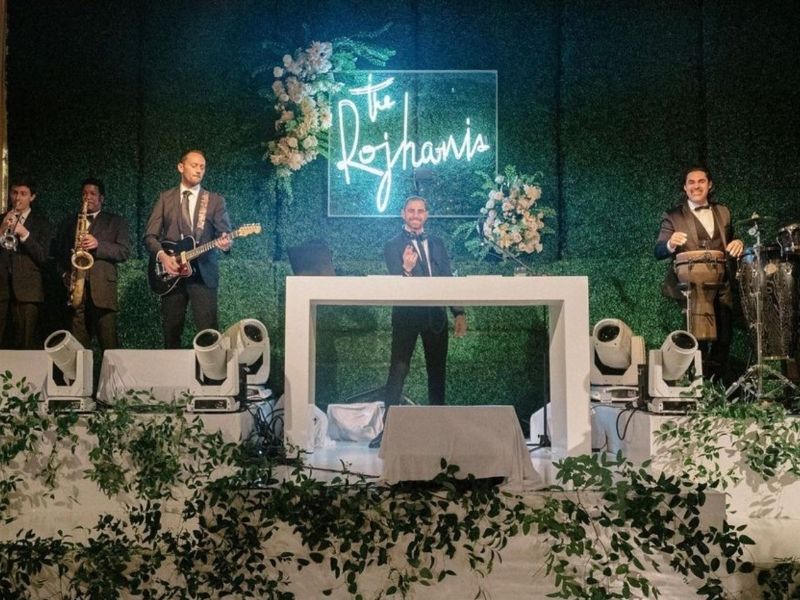
LIV DJ Band: live sax and percussion over the decks
A DJ with live musiciansLIV's pairing of a DJ with live players: one of our DJs runs the music while a saxophonist, a violinist or hand percussion plays on top. It brings live players to the dance floor without the stage a full band needs. The DJs and their videos are on our Phoenix DJ page.
Ceremony outside, dancing inside? Tell us both rooms and we'll pair an acoustic act with a band for the same date.
Pair two actsThree wedding reviews: Rouge on stage, and Nathan's team from planning to the last dance

Nathan and his company provided excellent service and resources both for our engagement party and the wedding itself. He heard all of our music suggestions and was available for multiple meetings. When the venue came with restrictions, Nathan countered with amazing ideas to make our ceremony and celebration unique. His energy is contagious, and his band is exceptional.
Our wedding was such a magical day. Rouge was amazing! They went above and beyond what we expected for our Persian/Mexican mixed wedding. The best part of our night dancing on stage with ROUGE overlooking 300 people on our dance floor sharing the magical night with us! We are incredibly lucky to have had them be apart of our wedding day! Highly recommend.
This company deserve more than 5 stars. If you are lucky enough to hear about them before your wedding, don’t doubt they are absolutely phenomenal. It’s. been over a month after our wedding and we still getting calls from our guests about how magical our wedding was. I can’t say enough about Rouge’s performance. The most professional, experienced, awesome people to work with
Wedding receptions
Live wedding bands for Phoenix venues that set an outdoor sound limit
A couple hiring a wedding band in Phoenix usually signs the venue first, and that contract already decides a lot about the music: where amplified sound can go, when it has to stop, whether outside vendors need the venue's approval and whether a planner from the venue's list is required. The eight venues below publish those rules in their own rental documents. We read the current version with you before suggesting a lineup, because a 10 p.m. outdoor cutoff and an 11 p.m. one lead to different nights.
Royal Palms Resort and Spa
- Outdoors
- Acoustic and lightly amplified music suggested for patios and lawns; outdoor sound must end by 10 p.m.
- Indoors
- Fully amplified entertainment kept to the salons
- Included
- A stage for the band and a dance floor up to 16 by 16 feet
- Planner
- Required, from the resort's preferred list
The natural split here is a quartet or Janeiro on the patio for the ceremony and cocktails, then Rouge or Legendary in a salon after dinner, with the band starting late enough to use the indoor hours.
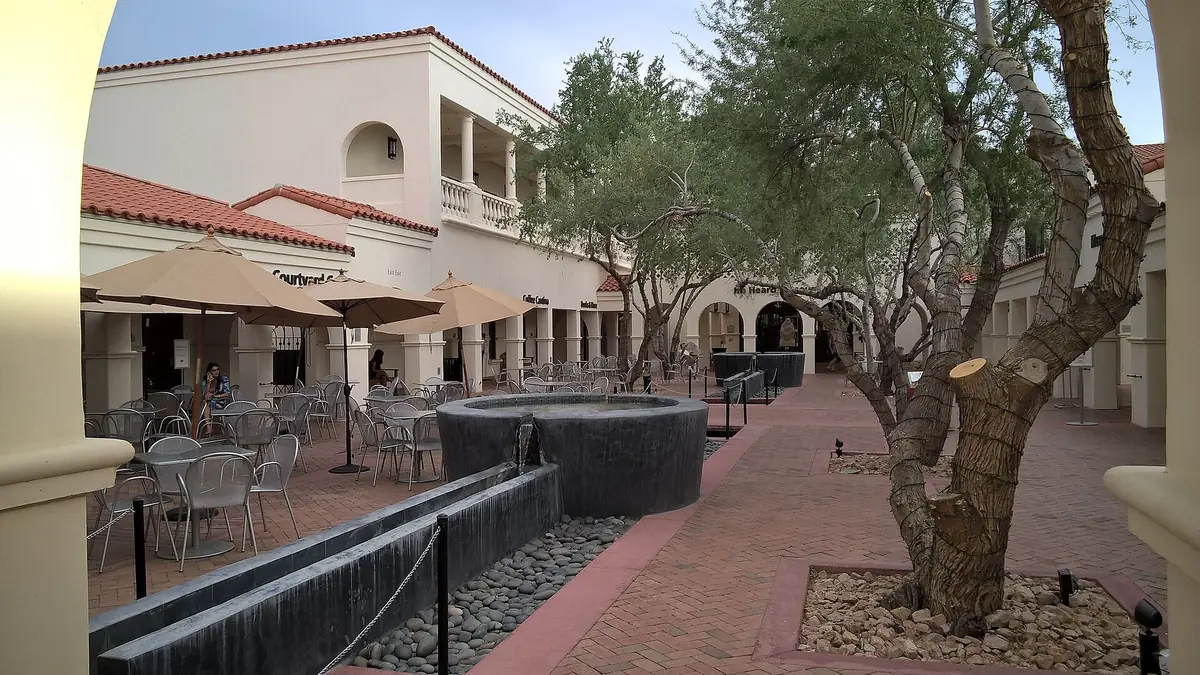
Heard Museum
- Outdoors
- Amplified music is restricted; tents are not permitted
- End time
- Evening events 6 to 10 p.m. Sunday to Thursday, 6 to 11 p.m. Friday and Saturday
- Courtyards
- Freeport-McMoRan Plaza: 500 at banquet tables, 750 for a reception; Virginia G. Piper Courtyard: 320 and 500
- Approval
- Outside entertainment must be approved by the museum in advance; American Indian cultural programs, including musicians and dancers, are arranged by the museum itself; fog machines are prohibited
That leaves the courtyards to the harp, the strings or a bossa nova trio. A full dance band needs an indoor room such as Steele Auditorium, which seats 330 for a banquet.
The Square PHX, Lath House Pavilion
- Capacity
- Up to 1,000 guests; about 500 with a seated meal, on 12,800 square feet
- Sound
- A city amplified-music permit ($10) is required; all music off at 11 p.m.; the event ends by midnight
- Setup
- Inside the contracted time, earliest 6 a.m.
- Vendors
- No required vendor list
An open pavilion where a full band is allowed with the permit. Setup counts against the rental hours, so a large lineup's load-in and sound check belong in the booking time you pay for.
Wrigley Mansion
- Planner
- A professional planner is required; day-of coordinators are not accepted
- Music
- Entertainment is arranged by the couple and their planner, not the venue
- Capacity
- Garden Room and Garden Terrace: 250 to 500 guests; weddings up to 1,000 (wedding guide)
Because the mansion books the band through your planner, we work out stage position, power and the timeline with the planner directly rather than with the venue.
Comparing two Phoenix venues for the same date? Send both, and we'll tell you which acts each one allows outdoors and in.
Compare two venuesPhoenix Zoo
- Hours
- Site rates include a 4-hour rental; evening rentals start no earlier than 6 or 6:30 p.m., depending on the site, and end by 11 p.m.
- Ceremony sound
- A PA system for the ceremony can be added for $200
- Catering
- From the zoo's preferred list
Four hours goes fast. When the ceremony and reception share one rental, a single act that can play both, such as the strings followed by a DJ with sax, keeps changeovers out of the clock.
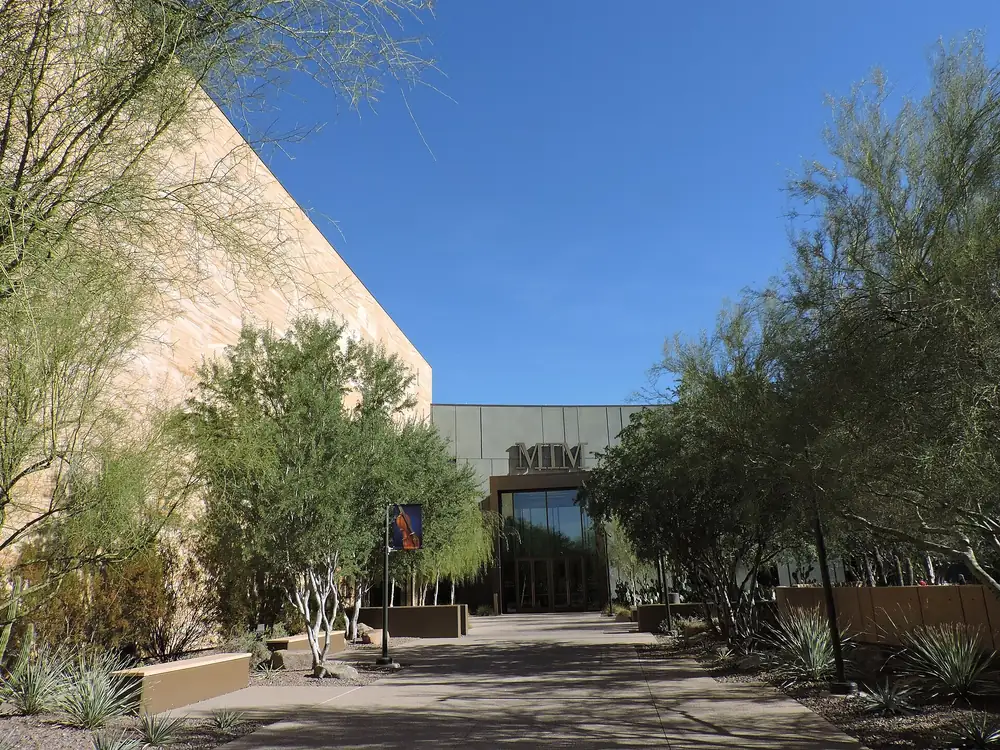
Musical Instrument Museum
- Rooms
- Main Courtyard: 500 reception, 250 seated; El Río: 120 to 420 seated, 300 to 1,000 or more standing
- Theater
- MIM Music Theater: 300 seats, 1,200-square-foot stage
- Buyout
- 1,000 or more guests across 200,000 square feet
A museum built around music, with a concert stage of its own. El Río seats anywhere from 120 to 420, so a reception with a dance band can stay in one room.
Arizona Grand Resort and Spa
- Grounds
- 164 acres at the base of South Mountain, 16 outdoor event venues
- Ceremony
- Every ceremony package includes a sound system with two microphones
- Vendors
- Preferred vendor list available
With so many lawns to choose from, the band question here is distance: how far the reception lawn sits from guest rooms, and whether dancing moves indoors. We ask the event manager before we size the band.
Arizona Grand meetings and events and 2026 wedding menu (PDF)
The Camby, Autograph Collection
- Ballroom
- Up to 550 at a banquet or 375 for a reception (650 theatre style), divisible into three sections
- Patio
- Grove Patio: up to 120
A hotel ballroom for a large reception, with a patio next to the Grove room for a smaller ceremony or the cocktail hour. A full Rouge show fits the ballroom at banquet size. Ask the hotel for its outdoor music hours in writing; they are not on its public pages.
Reading a venue contract for the band
Before you sign, find four lines in the venue's packet and send them to us: the outdoor music cutoff, the time the rental ends, any limit on amplified sound, and the load-in door or dock. Those four decide how big the band can be, where it plays and whether the dance set fits before the cutoff. When a venue only says "level of noise permitted outside" will be discussed with your event manager, as Royal Palms does, ask for the answer in writing and pass it on so the band sets its volume from the agreement rather than from guesswork on the night.
Already holding a Phoenix venue? Send the contract page with the music rules and we'll tell you which acts fit inside them.
Match acts to my venueWedding ceremonies and cocktail hours
Strings, harp and cellos in Phoenix's dry air: planning the unplugged part of a wedding
Because so many Phoenix venues limit amplification outdoors, the ceremony and the cocktail hour usually fall to acoustic players: a harp, a string quartet, two cellos, a bossa nova trio. Those are also the instruments most affected by the city's air. Taylor Guitars, in its guide to dry guitars, names Phoenix alongside Reno and Las Vegas as places with low humidity and calls low relative humidity the condition that can do more damage to an instrument than any other. Its humidifier guide puts the safe range for a guitar at 45 to 55 percent relative humidity.

Where the instruments wait
Taylor's guitars are made of the same spruce and maple as a cello, a viola or a harp, and its list of what dry air does ends with strings that buzz and wood that cracks. Its first defense is the one that matters at a venue: an instrument kept in its case dries far more slowly. So the useful request to a Phoenix venue is a cool indoor room near the ceremony site where cases can wait until the players walk out, and a harp's soundboard and a cello's varnish stay out of direct sun once they do.
From the lawn to the salon at Royal Palms
Royal Palms' 2026-2027 wedding packages pair each ceremony site with an indoor room: the Vernadero Lawn for up to 180 guests, Camelback Vista for 160 and the Alegria Garden for 120, with the reflecting pool, the Estrella salon or the Palmera salon named as the partner spaces. That pairing is the band plan. The acoustic act plays the lawn, and the dance band sets up in the paired salon during the ceremony, so nobody hears a line check over the vows and the reception starts on time. Every package also includes two microphones and a ceremony sound system, which covers the officiant without bringing in a second rig.
At the Heard, the dance band goes to Steele Auditorium
When the ceremony and cocktails are in the Heard's courtyards, the room for dancing is Steele Auditorium. The museum's private events brochure gives it 4,500 square feet, 20-foot ceilings and its own audio-visual equipment, with 330 at banquet tables, 500 for a reception or 425 theater style. The Steele Foyer next door, with its window seats, holds 250 for a cocktail hour before dinner in the auditorium. That makes a clean split for a Heard wedding: Janeiro or the quartet outside, then Rouge or 26 Orchestra under a 20-foot ceiling once dinner is served, within the museum's evening hours.
At MIM, two levels of El Río
MIM's El Río space is split between a lower level of 9,300 square feet and an upper level of 5,700, according to its event page. A reception can use the upper level for cocktails with an acoustic act and the lower one for dinner and the dance band, so the change of music happens with a change of floor rather than a pause in the same room.
Splitting a Phoenix wedding between a courtyard and an indoor room? Tell us the venue, and we'll suggest the act for each space and when the band sets up.
Split my wedding musicShade trees at the Phoenix Art Museum's garden
The Phoenix Art Museum's event page offers the Dorrance Sculpture Garden, more than an acre of lawns and mature shade trees, for ceremonies, with the Chase Lobby's windows overlooking it as a cocktail-hour room and a 300-seat theater inside. Mature trees solve the shade question for a quartet or a harp without a canopy. The museum doesn't publish its music rules online, so the outdoor sound limit and the end time are the first questions to put to its events team before choosing between an acoustic act and a band.
When a microphone is allowed
Some venues allow light amplification outdoors. Arizona Grand also includes a sound system with two microphones in every ceremony. In venues like these the officiant's microphone can share the system with a small mix for the strings, so the vows and the music reach the last row without turning anything up. Where the venue says no amplification at all, we put the players closer to the guests rather than louder.
Which acoustic act for which part of the day
- Processional and vows: harp or string quartet, both able to play a recognizable entrance song at a volume that never covers the officiant.
- Signing and recessional: Deux Cellos or the quartet, with a faster arrangement of a pop song for the walk back down the aisle.
- Cocktail hour on a patio: Janeiro, the saxophonist or Chechi, music people can talk over while the room is turned for dinner.
- Dinner indoors: LIV Vintage or Mood, before the dance band takes over.

A note on the season
The cool months most couples choose for an outdoor ceremony here are still dry. October and November averaged 29 and 33 percent in the decade we looked at. The heat calendar, sunset times and storm season that decide the date itself are covered on our Phoenix DJ page, so this page stays with the instruments.
Planning an outdoor ceremony in Phoenix? Tell us the venue and the hour, and we'll suggest the acoustic act and where to place it.
Plan the ceremony musicCorporate events
Hiring a corporate event band for the Phoenix Convention Center, Symphony Hall or the Orpheum
A company gala, awards night or client reception in downtown Phoenix often lands in one of three buildings the City of Phoenix runs together: the Phoenix Convention Center, Symphony Hall and the Orpheum Theatre. They share one set of contract terms, and those terms reach the band. Power, rigging and insurance are handled differently here than in a hotel ballroom, and the planner who books the room is the person who has to fit the band into them.
Power comes from the building's own electrician
The city's sample use agreement reserves to the venues the "sole and exclusive right" to supply utility services, electricity included, along with rigging, telecommunications and ushering. At the Convention Center, the facility guide names Commonwealth Electric as the exclusive utility provider and AV Concepts as the exclusive rigging company. For a band, that means the circuits for the stage, the backline and any lighting are ordered through the building, not run off a wall outlet, and anything hung overhead goes through the rigging contractor. We send the band's power needs early so they go on the order with everything else for the event.
The certificate of insurance has a deadline
The use agreement asks for general liability of $1,000,000 per occurrence and $2,000,000 aggregate with the City of Phoenix named as additional insured, and certificates at least thirty days before the event. If vehicles use the loading docks or freight elevators, automobile liability is required as well, and the agreement is blunt about the consequence: without it, "access to loading docks will be denied." The facility guide's one-month checklist flags the same certificate and warns that missing the deadline could cancel the event. A band's cases usually arrive by vehicle at the dock, so the vehicle coverage matters even when the musicians never touch the house equipment.
Three ballrooms and an outdoor block
The same facility guide maps the rooms. The West Building's ballroom on the 300 level has 45,200 square feet, the North Building's 45,600, and the South Building's 28,000, with 61 loading docks across the campus. Canyon on Third adds 80,000 square feet of outdoor event space in the middle of the center. For a band, the choice changes the job: a ballroom party runs on the building's electrical order inside a room built for sound, while an evening on Canyon on Third is an outdoor show downtown, where the stage, the power and the sound level have to be planned like the festival steps further down this page.
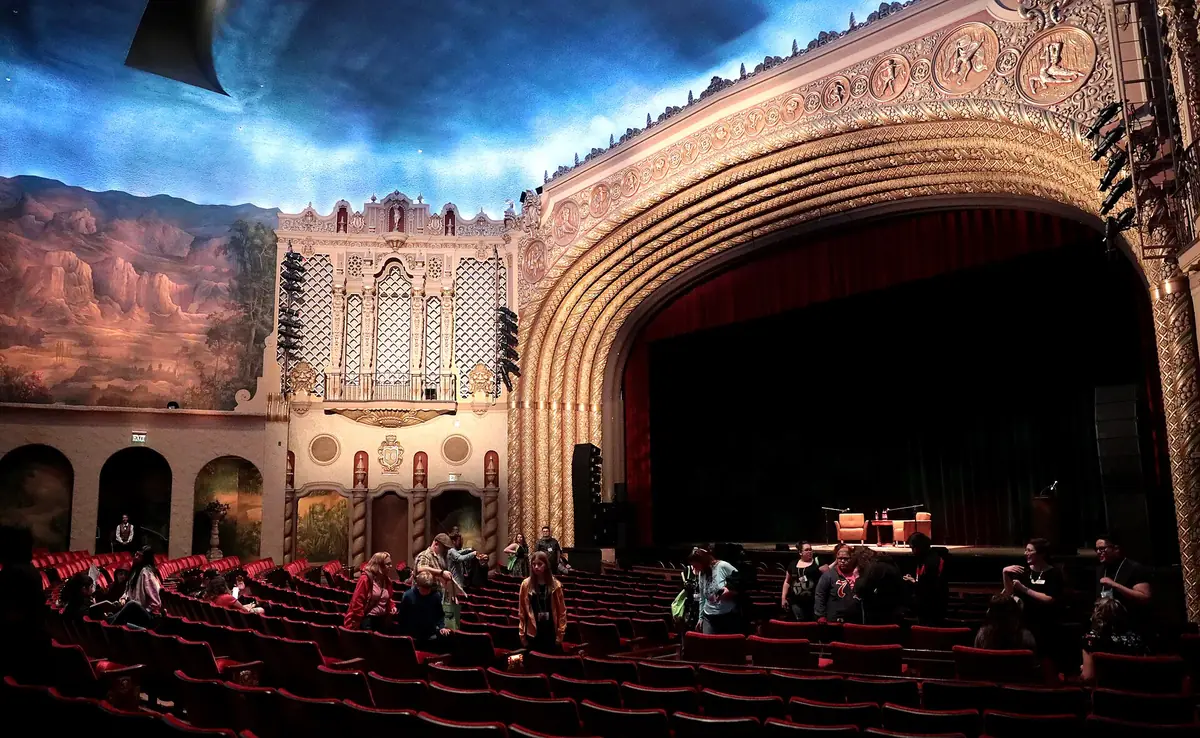
Symphony Hall: a concert stage for an awards program
Symphony Hall's technical specifications give 2,241 seats on the main floor and balcony, 2,312 with the orchestra pit seats, and put the stage door and dock off 2nd Street just north of Washington. The same document lists three 400-amp company switches upstage right. Stagehands for the house equipment come through a contractor that uses IATSE Local 336 members, and those stagehands run or supervise anything belonging to the hall. The document also notes that Arizona is a right-to-work state and that the hall is not an exclusively union house, so a band's own technicians can operate the band's own gear. Rigging points must be approved by the production coordinator two weeks before load-in.
Weighing Symphony Hall against the Orpheum for an awards night? Send the program and we'll tell you what the band needs from each house.
Compare the two theatersThe Orpheum: a dock that slopes
At the Orpheum, 203 West Adams, the 1,384-seat house described in its technical specifications takes an awards program or a corporate concert. The loading dock is on Adams between 2nd and 3rd Avenue, and the venue's own note warns that it "slopes down to the dock at a 5-degree angle," with load bars recommended. A production coordinator prices stagehand labor, equipment and dock use, and a production services staff member has to be on site for any work. The theater states plainly that it is not a union house and that clients may use their own people on their own equipment, while house positions are still required.
How much stage the two theaters give a band
The technical specifications put the Orpheum's proscenium at 50 feet wide and 26 high, with a working area 45 feet wide and 40 deep and a working depth of 42 feet including the forestage. Symphony Hall's opening is 57 feet 8 inches wide and almost 31 feet high, with 2,544 square feet of working area, 51 feet 9 inches of working depth including the forestage, and a Wenger orchestra shell enclosing 2,015 square feet. The hall also caps floor loading at 150 pounds per square foot. Either stage takes the full 18-piece Rouge show with room for its choreography; on stages this deep, the question is where the band sits in relation to the speeches and the screen, and that goes on the stage plot sent to the production coordinator.
Mixing position and doors at the Orpheum
The Orpheum's specifications put the front-of-house mixing position, 10 feet wide by 7 feet 6 deep, about 91 feet from the front of the stage, with a house console that can't be removed. Any multicore cable a band runs to the back of the house has to go through the road-show raceway under the floor, about 250 feet, and the theater asks for extra labor and time for it. Gear comes in from the dock through a door 12 feet tall and 11 wide, then onto the stage through an upstage-right door 12 feet tall and 9 wide, and deliveries outside the contracted rental period may be refused. For a band, the practical choice is between mixing on the house system or running its own line to that position, and the second option needs to be on the labor estimate.
Haze, cold sparks and drapes
Our lighting crew can add haze, cold sparks and stage drapes to a band's show, and the city's theaters have rules for each. The Orpheum and Symphony Hall both want a Material Safety Data Sheet for any fog or haze fluid brought into the building before move-in, and both require scenery, backdrops and fabric to carry a flame-retardant stamp or sewn-on certificate, or be flame-tested on site. Pyrotechnics and open-flame effects need a Phoenix Fire Department permit and clearance from the production coordinator and the on-site fire marshal at least two weeks before the event, and Symphony Hall notes that other similar effects may need a permit too. For a band, the practical result is simple: decide on the effects when the lineup is chosen, not the week of the show.
The Convention Center's planning calendar
The facility guide sets out a countdown for planners. Nine months before the event, it asks for the contact details of outside suppliers, production and audio-visual companies included. At three months, floor plans go to the fire marshal and catering, audio-visual, electrical, security and internet services are finalized with the building's partners. At one month, the floor plan and event specs are locked and the insurance certificate is due. A band booked late can still fit, but its power and stage need to reach the electrical order by the three-month mark to avoid a rush.
Outside the downtown buildings
Not every company night needs a theater. MIM lists galas, fundraisers, holiday parties and business gatherings among its event types, and its Music Theater gives a band a built stage. For a seated dinner with a short program, Mood or LIV Vintage can play under the speeches and step up for a dance set; for a ballroom that wants a full floor after the awards, Rouge or Legendary are the acts we suggest.
The Phoenix Zoo is the other company-party venue with several rooms on one site, set out in its 2026 event information. Stone House Pavilion is an indoor banquet room for up to 300 with a covered terrace and a basic in-house audio-visual system; the event center's main hall seats 280 and divides into three rooms; Lakeside, under a canopy tent by the main lake, takes 300 picnic-style for a company picnic, with a basic lighting package in the evening. The Doornbos Discovery Amphitheater is rented for evenings only, at $5,000. For a band, the indoor pavilion and the hall behave like a hotel room with a house system for the speeches, while Lakeside and the amphitheater are outdoor shows where the zoo's evening rules decide the volume.

What the planner sends us, and when
- The venue and room, the run of show and the minutes set aside for music.
- The venue's insurance language, so the band's certificate names the right parties.
- The production coordinator's contact, for power, stage size and rigging.
- The load-in window and dock, with the vehicle that will use it.
- Any clean-lyrics or volume request for a program with speeches.
With those five we can confirm a lineup, the stage footprint and the power order in one reply.
Booking a Phoenix company event in a city venue? Send the room and the date, and we'll return the band's stage and power needs with the quote.
Plan a corporate bandFestivals and community events
A live band for a Phoenix festival: the city paperwork behind the stage
Street festivals, block concerts, school carnivals and neighborhood celebrations in Phoenix go through the city before a band can plug in. The organizer holds the permits; the band has to fit what those permits allow, from sound-check times to the decibel ceiling. These are the steps the City of Phoenix publishes, in the order an organizer meets them, with the part each one plays in booking the music.
Choose the application: park, street or private land
The Parks Department's Street Special Event Application covers events on city property or in the right-of-way, "such as a street festivals, concerts, farmers markets, parades," according to the city's outdoor events page. An event in a city park can apply at any community or recreation center. Large private-property events follow the fire and building permits explained on our Phoenix DJ page.
File a street closure at least 90 days out
The Street Transportation Department's special event checklist wants the street-closure application "a minimum of 90 days before the start date," accepts new events 11 months ahead and charges a $400 application fee. A band's date can be held while the permit is in review; the contract only needs the event date fixed.
Put the sound checks in the application
The same checklist asks for the times and dates of any sound checks in the application itself. We give the organizer the band's check time in writing, so the form and the band's schedule say the same thing.
Tell the neighbors 45 days ahead
When amplified sound is planned, notification has to reach at least a five-block radius around the event, at least 45 days before it, per the checklist. The flyer is the organizer's job; the start and end times on it should match the band's set times.
Keep the level under 100 decibels
The checklist states that the decibel level "shall not exceed 100 per city ordinance," and that police or a city representative can order the organizer to lower or stop the sound if it disturbs others. Our audio engineers mix to the limit in the permit, and the lineup is sized with that ceiling in mind.
Permit the stage if it stands over 30 inches
The city's outdoor events page requires a building permit from Planning and Development for "any stage or platform higher than 30"," with details in its stage and platform guideline. A band on a riser of 30 inches or less stays under that line, which is worth knowing when the stage is still being chosen.
Insurance two weeks before, amplified sound approved in parks
The Street Transportation special event liaison must receive the insurance paperwork at least two weeks before the event. In a city park, the parks code of conduct lists amplified sound without approval as prohibited, and the rentals and permits page offers an Amplified Sound Permit; events of 3,000 or more go to the parks events office directly.
The city's own mobile stages
Phoenix Parks rents a stage on wheels. Its Showmobile request form lists a large unit, 24 feet deep by 24 wide, for $865, and a small one, 16 by 20 feet, for $625, both with staff to set up and tear down; a sound system adds $60 plus $60 an hour for an operator. Requests have to arrive at least 60 days before the event, and the form asks for a sound-check time, like the street application does. The large stage takes a full dance band with room for its backline; the small one suits a trio, a duo or a DJ with live sax. If the festival rents the city's sound system, the band's engineer and the city's operator need to agree before the day who mixes the band.

What kind of band works on a festival stage
A festival crowd walks in and out, so the set list leans on songs people recognize within the first few bars, and long ballads stay home. Rouge's smaller versions and Legendary both carry a stage like this; 26 Orchestra suits a cultural festival where the audience wants songs in Persian, Spanish, Arabic or Greek. For a farmers market or a daytime family event that wants music without a full sound system, a duo such as Chechi or a saxophonist works at a volume the neighbors on the notification list will barely notice.
Organizing a Phoenix festival or street event? Send the permit dates and the stage plan, and we'll quote a band that fits them.
Quote a festival bandPrivate parties
Private party bands in Phoenix, sized to the room you rent or the yard you have
Birthdays, engagement parties, graduation dinners and reunions in Phoenix tend to happen in one of three places: a small room rented for the night, a resort patio, or the host's own backyard. The larger rooms in the wedding section above work for a big family party too; the table below covers the smaller ones. Each one sets a different ceiling on the band. A rented room usually publishes a capacity and an end time; a patio usually limits amplification; a backyard has no published rule except the city's. When you write to us, the guest count, indoors or out, the hour the music must end and whether neighbors share a wall tell us which of the acts below fit.
| Room | What the venue publishes | Act that fits |
|---|---|---|
| MIM Founder's Room | 125 for a reception, 100 seated; MIM lists birthdays and anniversaries among its event types (MIM) | Chechi or Janeiro over dinner; LIV Vintage if the party wants to dance |
| MIM Café Allegro | 100 seated, with MIM's own catering (MIM) | A saxophonist or Deux Cellos, music that sits under the table talk |
| Rosson House porch, The Square PHX | Offered for small events, next to the larger Lath House Pavilion; no required vendor list (The Square PHX) | Harp or a duo for an engagement toast |
| Arizona Grand, open-air venues | Open-air spaces for up to 100 guests (2026 menu, PDF) | Janeiro, the strings or Deux Cellos |
| The Camby, Grove Patio | Up to 120, just outside the Grove meeting room (The Camby) | A duo or the saxophonist; move indoors for a band |
A band in a Phoenix backyard
Drums and a bass amplifier travel through a block wall and over a fence in a way a DJ's speakers, turned toward the house, do not. The city's loud party ordinance, and what a repeat police call costs the host, are set out on our Phoenix DJ page. For a band, the practical answer is the lineup: a duo or a sax-and-DJ setup in a yard, and a full band only where the venue has walls or a permit behind it.
Rehearsal dinners in the Wrigley Mansion's rooms
The night before a wedding often happens in a smaller room, and the Wrigley Mansion's spaces guide is unusually specific about them. The Living Room and the Formal Dining Room each seat 50, and the Living Room keeps the Wrigley family's Steinway player piano; the Verandas seat up to 120; the Colina and Catalina rooms upstairs seat 40 and are reached by the grand staircase or the elevator. The guide also counts the steps into each room, two into the dining room and four into the Breakfast Room, which is exactly what a band carrying amplifiers and a drum case wants to know. LIV lists Mood for rehearsal dinners and private dining rooms; in a room for 40 or 50, a duo or the saxophonist fits without moving furniture.
A party in a city park is a different case: the park's own amplified-sound approval comes first, and the ramada rules are on our Phoenix DJ page.

Hosting a party at home or in a rented room in Phoenix? Give us the space and the guest count, and we'll match the band to it.
Size a band to my partyPhoenix ZIP codes on our band list, and the Valley towns beside them
The list covers the City of Phoenix, including Laveen and the post-office-box codes downtown, plus nearby Valley ZIPs that we quote the same way as Phoenix. Retired codes have been taken off. For a venue in Old Town Scottsdale or in Mesa, those cities have their own pages: Scottsdale live bands and Mesa live bands. Tucson has its own page too: live bands in Tucson.
All 90 ZIP codes
City of Phoenix, including Laveen
- 85001
- 85002
- 85003
- 85004
- 85005
- 85006
- 85007
- 85008
- 85009
- 85010
- 85011
- 85012
- 85013
- 85014
- 85015
- 85016
- 85017
- 85018
- 85019
- 85020
- 85021
- 85022
- 85023
- 85024
- 85026
- 85027
- 85028
- 85029
- 85030
- 85031
- 85032
- 85033
- 85034
- 85035
- 85036
- 85037
- 85038
- 85039
- 85040
- 85041
- 85042
- 85043
- 85044
- 85045
- 85046
- 85048
- 85050
- 85051
- 85053
- 85054
- 85060
- 85061
- 85062
- 85063
- 85064
- 85065
- 85066
- 85067
- 85068
- 85069
- 85070
- 85071
- 85072
- 85073
- 85074
- 85075
- 85076
- 85078
- 85079
- 85080
- 85082
- 85083
- 85085
- 85086
- 85339
Neighboring Valley towns
- 85087 (New River)
- 85226 (Chandler)
- 85251 (Scottsdale)
- 85254 (Scottsdale)
- 85255 (Scottsdale)
- 85253 (Paradise Valley)
- 85281 (Tempe)
- 85304 (Glendale)
- 85306 (Glendale)
- 85307 (Glendale)
- 85308 (Glendale)
- 85310 (Glendale)
- 85331 (Cave Creek)
- 85353 (Tolleson)
- 85383 (Peoria)
Venue somewhere on this list, or just past it? Send the address and the date, and we'll say which acts can get there.
Ask about my addressLive party band and dance band FAQs for Phoenix, AZ
Which Phoenix events do our party bands play?
Weddings, corporate events, private parties, birthdays, bar and bat mitzvahs, sweet sixteens, quinceañeras and festivals. In Phoenix the venue usually decides which act fits more than the occasion does: a resort lawn with a 10 p.m. outdoor cutoff points to an acoustic act, a city theater to a full band with its power ordered through the building, and a street festival to a lineup sized for the permit.
Which choices raise or lower a Phoenix party band quote?
Four things move a Phoenix party quote most: how many musicians are on stage, how many hours they play, the date, and what the venue already supplies. Two more are particular to Phoenix: the musicians travel from Southern California, so travel is part of every quote, and some city-run venues order power for the stage through their own electrician, which shows up on the venue's bill rather than ours. Contact us with the date and the venue for a free quote with no commitment.
What does a Phoenix wedding band usually cost?
We don't publish an average, because the lineup moves the number more than anything else. Rouge alone runs from three performers to forty: its videos show Rouge Ettes, three vocalists over a DJ track; a six-piece with three vocalists and three musicians; an eight-piece with six vocalists and two musicians over a DJ track; and the 18-piece show. Legendary plays as a seven-piece and has a twelve-piece version on video. Each step up adds performers, travel and stage space, and a second act for the ceremony is priced on its own.
Besides dance bands, which kinds of bands can LIV bring to Phoenix?
- Live wedding bands
- Bands for parties
- Acoustic bands
- Cover bands
- Jazz bands
- Corporate event bands
How do I hire a wedding band in Phoenix through LIV?
- Sign the venue, then send us the date, the venue and the rooms where the ceremony, dinner and dancing will happen.
- We check which acts are free and which of them fit the venue's music rules, and reply with a shortlist.
- Watch the acts' videos on their profile pages and pick one, or one for each part of the day.
- The quote lists the lineup, the hours, travel and any production, and the contract holds the date.
- In the weeks before, we go over the song list, the entrances and the timeline with you and your planner.
Should we book a variety band or a cover band for a Phoenix reception?
A variety band such as Rouge switches between American, Latin, Russian, Indian, Israeli, Persian and Armenian sets in one night, which suits a reception where the two families grew up on different music. A cover band such as Legendary stays with rock, pop and funk hits from the last sixty years and suits a guest list that wants the songs everyone already knows.
Do you have rock bands for hire in Phoenix?
Legendary is the rock act on our roster. Its videos include Van Halen's "Jump," Journey's "Separate Ways" and The Police's "Message in a Bottle," next to Aretha Franklin and Rihanna, so you can hear the range before you book.
Where do LIV's musicians travel from for a Phoenix date?
From Southern California. LIV is based in Culver City, Rouge describes itself as a Southern California band; Charissa, our harpist, is based in the San Diego area. Every Phoenix booking includes the musicians' travel, and the quote shows it as its own line.
Do you also play Tucson and the rest of southern Arizona?
Yes. A wedding or corporate event in Tucson or elsewhere in southern Arizona is quoted the same way as a Phoenix one, with travel to that venue. Our Tucson live bands page covers that city.
Does LIV supply the band's sound system and stage lighting in Phoenix?
Bands that need amplification can come with sound and lighting from our lighting and AV crew, which handles audio, lighting design, staging and power distribution. When the venue already supplies a stage, a dance floor or a ceremony sound system, we leave it out of our quote so nothing is paid for twice.
How much room does a live dance band need?
It depends on the lineup. A duo or a saxophonist needs a corner of the room; a full Rouge or Legendary lineup needs a stage or riser at one end of the dance floor, with power close by; the 18-piece show needs a proper stage. Send us the venue's floor plan and we'll mark where the band goes and where the cases wait.
Can the band learn a song for our first dance?
Ask when you book. Our bands play from large songbooks in several languages, and Rouge's 18-piece show includes custom-arranged dinner shows. Send the request early so there is time to arrange it for the lineup you chose.
Can a Phoenix band booking include a DJ, lights or dancers?
Yes. Rouge can share the night with one of our DJs, with the band opening the floor and the DJ taking over, as its profile describes; our Phoenix DJ page has the DJs. LIV also books African hand drummers and samba dancers, and our lighting crew adds the haze and cold sparks that the city theaters ask you to clear two weeks ahead.